|
OpenLB 1.7
|
Loading...
Searching...
No Matches
|
OpenLB 1.7
|
AnalyticalRandomBase: virtual base class for all the random functionals. More...
#include <analyticalF.h>
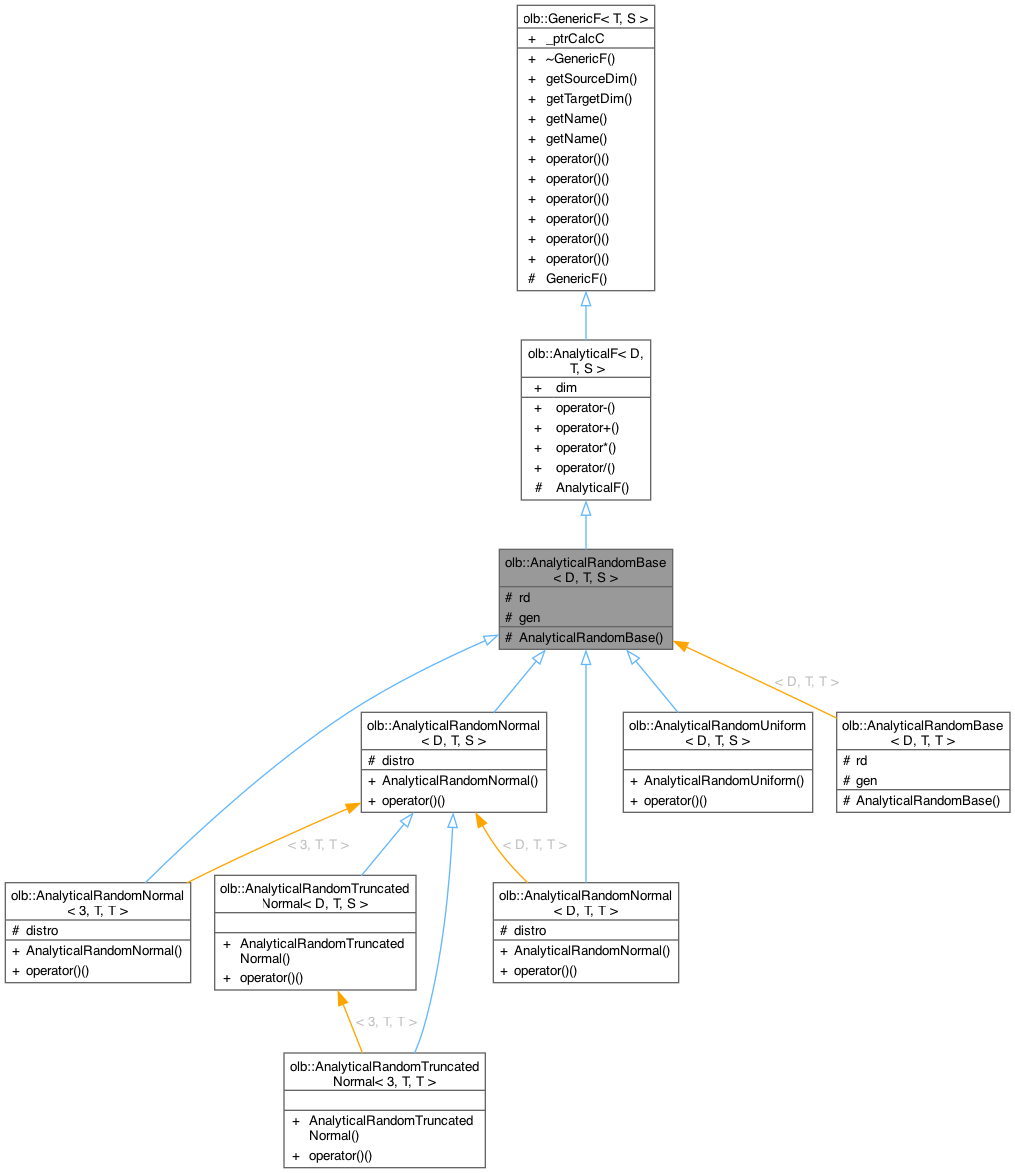
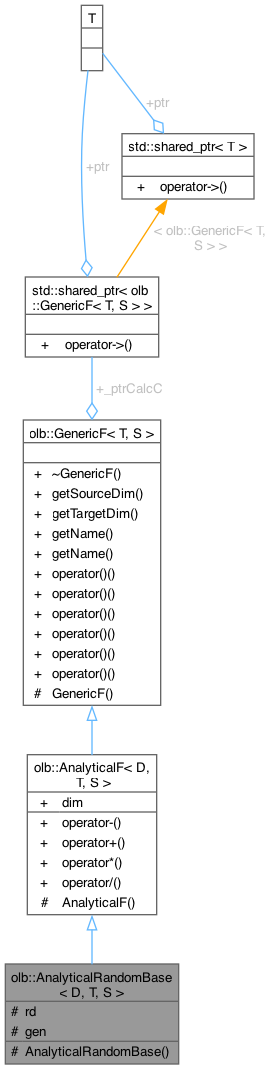
 Inheritance diagram for olb::AnalyticalRandomBase< D, T, S >: Collaboration diagram for olb::AnalyticalRandomBase< D, T, S >:
Protected Member Functions | |
| AnalyticalRandomBase () | |
| Protected Member Functions inherited from olb::AnalyticalF< D, T, S > | |
| AnalyticalF (int n) | |
| Protected Member Functions inherited from olb::GenericF< T, S > | |
| GenericF (int targetDim, int sourceDim) | |
Protected Attributes | |
| std::random_device | rd |
| std::mt19937 | gen |
Additional Inherited Members | |
| Public Types inherited from olb::AnalyticalF< D, T, S > | |
| using | identity_functor_type = AnalyticalIdentity<D,T,S> |
| Public Types inherited from olb::GenericF< T, S > | |
| using | targetType = T |
| using | sourceType = S |
| Public Member Functions inherited from olb::AnalyticalF< D, T, S > | |
| AnalyticalF< D, T, S > & | operator- (AnalyticalF< D, T, S > &rhs) |
| AnalyticalF< D, T, S > & | operator+ (AnalyticalF< D, T, S > &rhs) |
| AnalyticalF< D, T, S > & | operator* (AnalyticalF< D, T, S > &rhs) |
| AnalyticalF< D, T, S > & | operator/ (AnalyticalF< D, T, S > &rhs) |
| Public Member Functions inherited from olb::GenericF< T, S > | |
| virtual | ~GenericF ()=default |
| int | getSourceDim () const |
| read only access to member variable _m | |
| int | getTargetDim () const |
| read only access to member variable _n | |
| std::string & | getName () |
| read and write access to name | |
| std::string const & | getName () const |
| read only access to name | |
| virtual bool | operator() (T output[], const S input[])=0 |
| has to be implemented for 'every' derived class | |
| bool | operator() (T output[]) |
| wrapper that call the pure virtual operator() (T output[], const S input[]) from above | |
| bool | operator() (T output[], S input0) |
| bool | operator() (T output[], S input0, S input1) |
| bool | operator() (T output[], S input0, S input1, S input2) |
| bool | operator() (T output[], S input0, S input1, S input2, S input3) |
| Public Attributes inherited from olb::GenericF< T, S > | |
| std::shared_ptr< GenericF< T, S > > | _ptrCalcC |
| memory management, frees resouces (calcClass) | |
| Static Public Attributes inherited from olb::AnalyticalF< D, T, S > | |
| static constexpr unsigned | dim = D |
AnalyticalRandomBase: virtual base class for all the random functionals.
Definition at line 114 of file analyticalF.h.
|
protected |
Definition at line 159 of file analyticalF.hh.
References olb::GenericF< T, S >::getName().
Here is the call graph for this function:
|
protected |
Definition at line 118 of file analyticalF.h.
|
protected |
Definition at line 117 of file analyticalF.h.
 1.10.0